
Speed to Lead
How to stop leads slipping through the cracks
Most leads go cold in two places: the first few minutes after they arrive and the first week of follow-up. Here is where they go and how to close both gaps.
Nearly every service business believes it responds to leads quickly. The timestamps almost never agree. Here is what the gap actually costs.

Ask any business owner how quickly their team responds to a new enquiry and you will hear a version of the same answer. Pretty quickly. Same day, usually. Within the hour if someone is at their desk.
Then you look at the timestamps.
Every lead has two times attached to it. The moment it arrived, and the moment a human being said something back that was not an automated acknowledgement. The distance between those two numbers is the single most predictive figure in the whole funnel, and almost nobody tracks it.
When we run an audit, that is the first thing we pull. Not conversion rate, not cost per lead, not the CRM’s opinion of the pipeline. Just the gap. And the gap is almost always larger than the business believes, for reasons that have nothing to do with the team being lazy.
The mistake is looking at the average response time. Averages hide the shape of the problem.
A business with a two hour average is usually not a business that takes two hours on every lead. It is a business that takes four minutes on the leads that arrive at 10am on a Tuesday, and eleven hours on the ones that arrive at 6pm on a Friday. The Tuesday leads convert. The Friday ones never even get a reply worth reading, and they quietly become part of the cost of doing business.
Look at the distribution instead. Split the leads by the hour they landed. The pattern shows up immediately.
Nothing dramatic. That is the problem.
The person who filled in your form did not sit by the phone waiting. They filled in three other forms, took a call from someone who answered faster, and by the time your team reaches them on Monday morning they have already had a conversation with a competitor and formed an opinion. Your reply does not arrive into a vacuum. It arrives into a decision that has already started being made.
The lead was never lost. It was answered second.
This is why response time behaves so differently to other funnel metrics. A ten percent improvement in ad copy gives you ten percent more of the same thing. Closing the response gap does not improve a conversation, it creates one that otherwise would not have existed at all.
In practice we see the same three, in the same order.
The instinctive fix is more people, or a rule that says leads must be answered within X minutes. Both fail for the same reason: they depend on a human being available at the exact moment the enquiry lands, which is a coverage problem that headcount solves expensively and rosters solve badly.
What actually closes it is having something that is always there, that reads the enquiry properly, replies in the voice of the business, asks the two or three questions that qualify the person, and hands a warm conversation to the sales team with the context already attached. Not a chatbot that deflects. Something that does the part of the job the team never gets to because they are on the phone with someone else.
The team still closes. They just stop being the bottleneck at the front of the funnel.
Before changing anything, pull the two timestamps for the last ninety days of enquiries and split them by arrival hour. You are looking for the hours where the gap goes from minutes to hours.
That is not a report you need us for. But it is usually the moment the conversation changes, because the number is rarely what anyone expects.
Under five minutes from the moment the enquiry lands, and it has to be a real reply that moves the conversation forward rather than an automated acknowledgement. The gap between one minute and thirty minutes is where most of the loss sits.
Especially then. Out of hours enquiries are the ones most likely to have gone to a competitor by the time anyone opens the inbox, because the person filling in the form at 9pm is usually filling in three or four of them.
It does when the reply is a template. It does not when the agent actually reads what the person wrote and responds to it. Speed is only half of the equation, and the half most businesses get wrong is the other one.
Most leads go cold in two places: the first few minutes after they arrive and the first week of follow-up. Here is where they go and how to close both gaps.
Voice AI and SMS solve different parts of the lead follow-up problem in Australia. Here is how each channel fits into the sequence, and when you need both.
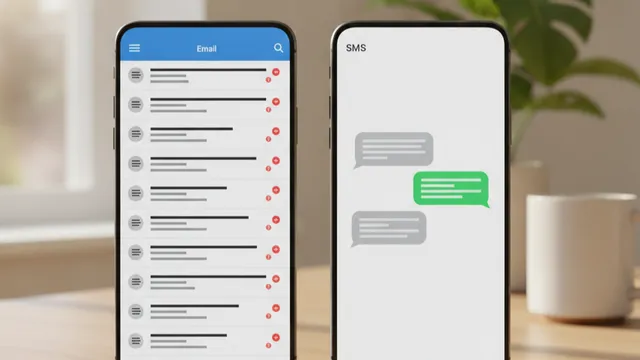
Email follow-up gets ignored. SMS gets opened. But which should you use to follow up with sales leads in Australia? Here is the honest answer.
We map where your leads go quiet, then show you the conversations an agent would have had. Thirty minutes, no obligation.