Speed to Lead
Voice AI vs SMS for lead follow-up in Australian service businesses
Voice AI and SMS solve different parts of the lead follow-up problem in Australia. Here is how each channel fits into the sequence, and when you need both.
Most leads go cold in two places: the first few minutes after they arrive and the first week of follow-up. Here is where they go and how to close both gaps.

Most leads in a service business go cold in two specific places, and neither of them is where most owners look first.
The first is in the few minutes immediately after an enquiry arrives and there is no one there to respond. The second is in the first week after initial contact, when the follow-up runs out after one or two touches and the lead stops moving forward without having made a decision.
Both gaps have the same underlying cause. There is a window where the lead is ready to engage, and the business is not there to catch them. By the time someone gets back to them, the window has often closed. In most cases the person did not give up. They simply moved to whoever was available first.
A better CRM will not fix this. You can have a well-organised contact system and still lose every after-hours lead. You can have a clear follow-up process and still stop running it through a busy fortnight. The issue is coverage, and coverage requires something running in the background that does not depend on someone remembering.
It sounds like a complex systems failure. For most service businesses it comes down to two very specific moments.
When someone fills in your form at 9pm, they are probably still comparing options. Many people evaluating service businesses submit more than one enquiry in the same sitting. That creates a race. The business that responds first gets the conversation while the person is still actively deciding.
Harvard Business Review research into how companies handle online enquiries found that businesses reaching a new lead within the first hour were far more likely to qualify that lead than those that waited any longer, and dramatically more likely than those that waited a full day or more. The implication is direct: the window for a genuine first response is narrow, and what is available to you at 9pm Sunday is a different conversation than what you can start at 9am Monday.
For a closer look at what that window costs, the five-minute window post covers the specifics.
Most service businesses do attempt to follow up, usually with a call or two. After that the lead sits in the CRM, nominally active, with nothing scheduled next.
The issue is not that anyone gave up deliberately. Keeping track of where thirty or forty active leads are in a follow-up sequence, and knowing which one to contact today and with what specific message, is genuinely difficult to manage alongside everything else that comes with running a service business. When a job runs long or the inbox piles up, the follow-up falls off the list. The leads do not disappear. They just stop moving forward.
And a lead that stops moving forward often ends up with whoever was still following up when the person finally decided to act.
Both gaps above are timing and coverage problems. Adding a more capable contact management tool does not change what happens when a form arrives at 11pm on a Sunday. It does not keep a follow-up sequence running through a busy fortnight when the owner is on the tools all week.
One of the most consistent failure points has nothing to do with the software.
Form submissions go to info@yourbusiness.com.au. Three people can see the notification. Each assumes one of the others has taken it. None of them do. By the time someone notices, the lead is eighteen hours old.
Nobody here is being careless. Well-intentioned people in capable teams lose leads this way because the setup creates an assumption of coverage rather than actual coverage. The fix is simple, but it has to be deliberate: every new enquiry gets a single person responsible for it, or an automated process picks it up, from the moment it lands. Shared inboxes work fine for many things. Responsibility for each specific lead cannot be shared.
Maintaining a structured follow-up sequence across a growing list of active leads is not something human memory handles well under load.
You know the last person you spoke with. The quote you sent Thursday is still clear. The twenty-two others in the CRM are nominally active, with no scheduled next step, because the moment you planned to sort them out got pushed aside by a job that ran over.
That has nothing to do with discipline. A person running a service business full-time cannot reliably track forty leads in different stages of a follow-up sequence and know exactly who needs a specific message and when. A sequence that runs on its own does not need the owner to find a clear afternoon.
The mechanics are specific. An immediate first response covers the speed gap. A structured follow-up sequence covers the persistence gap. Neither of those requires a new hire or a major rebuild of how your business operates.
An AI sales agent responds to every new form submission within seconds of arrival. It writes in the voice of your business, refers to what the lead actually wrote and asks the first qualifying question, instead of sending a generic acknowledgement that nothing will happen until Monday.
That covers the after-hours gap. The lead who submits at 10:45pm on a Wednesday gets a response before any competitor has logged in to see the same form. For a detailed breakdown of what that coverage looks like in practice, the after-hours lead response post goes through the specifics.
One practical note on automated SMS outreach in Australia: commercial electronic messages are regulated under the Spam Act 2003, which requires that recipients can opt out and that there is a basis for contact. Most businesses using form submissions have that basis through the submission itself, but it is worth confirming your process is compliant before scaling.
After the initial response, the agent maintains a structured sequence over the following days. The day-two message is a question about the lead’s timeline. The day-four message references something from the earlier exchange. The day-seven message is brief and gives the lead a clear way to either re-engage or close the conversation out.
Each message is different because each one gives the lead a new specific reason to reply. The same person who did not respond to a general follow-up on Tuesday may respond on Thursday to a question that is directly about their situation and where they are in the process.
Speed to Lead is the product that manages this sequence and connects it to the tools your team already uses. Your team sees a qualified conversation with full context attached, not a cold form submission from several days ago.
Before investing in any solution, it helps to know exactly where the leakage is. Here is a straightforward way to find out.
Check what happens to an after-hours enquiry. Submit a test form to your own website at 9pm on a weeknight. Note when the first response arrives and what it says. If the answer is nothing until the following morning, the first gap is open and you can see exactly what it costs you.
Pull your last 90 days of form submissions and sort them by hour. Look for clusters in the evenings and on weekends. Enquiries that arrive then often come from people who finally had time to sit down and research properly. If nothing is responding to them outside business hours, that is the size of the gap.
Track where active follow-ups actually stop. Look at the last ten leads that did not convert. How many contact attempts were made, and over how many days? If most of them stopped after one or two touches with nothing scheduled next, the second gap is your problem.
The Revenue Engine Audit maps both of those gaps against how your business actually handles enquiries, so you can see where the leakage is before deciding what to fix.
Most lead leakage happens in two windows: the gap between an enquiry arriving and someone responding to it, and the stretch after first contact where the follow-up stops before the lead has made a decision.
Both are fixable. An automated first response covers the speed gap. A structured follow-up sequence covers the persistence gap. Together they mean every enquiry gets contacted quickly and followed up consistently, without depending on someone having the right information at exactly the right moment.
The leads you think have gone cold are very often still deciding. They stopped hearing from you before they were ready to commit. That is the gap worth closing.
The five-minute rule refers to the pattern that new leads contacted within the first few minutes of submitting an enquiry are far more likely to engage than those contacted later. The reason is not speed for its own sake. Most people comparing service businesses submit enquiries to more than one business at roughly the same time, so the business that responds first gets the conversation while the person is still actively deciding. After that window closes, the person may have already moved forward with someone else.
Start by finding where leads go cold. Check what happens to an enquiry that arrives at 9pm: does anything respond to it before the following morning? Then check what happens to a lead that does not reply after the first contact: is there a next step scheduled, or does the sequence just stop? Both of those gaps are where most lead management breaks down. Fix the first with an automated response process and the second with a structured follow-up sequence over the first week.
Most of the time it is not because they decided against you. It is because the follow-up ended before they were ready to decide. Someone comparing service businesses may need several days to assess quotes, speak to a partner, or clear time in their schedule. If the only follow-up was a call that rang out, the lead is not necessarily cold. The follow-up just ran out.
Lead leakage is what happens when an enquiry enters your business and exits without a decision being made. It happens most consistently at two points: when a new enquiry gets no immediate response, and when the follow-up stops after one or two touches before the lead has committed either way. Stopping it requires covering both windows: an automated first response so nothing goes unanswered regardless of when it arrives, and a structured follow-up so nothing goes cold while the lead is still deciding.
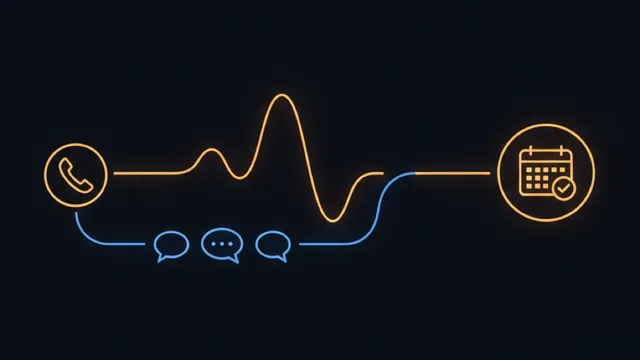
Voice AI and SMS solve different parts of the lead follow-up problem in Australia. Here is how each channel fits into the sequence, and when you need both.
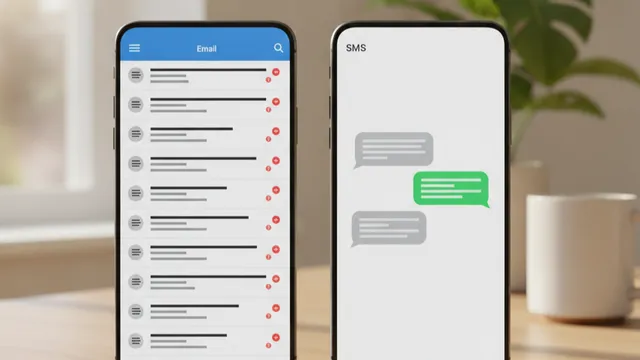
Email follow-up gets ignored. SMS gets opened. But which should you use to follow up with sales leads in Australia? Here is the honest answer.
The question gets asked backwards. Most customers who text a business get no reply. Here is what the data shows and what to do about it.
We map where your leads go quiet, then show you the conversations an agent would have had. Thirty minutes, no obligation.