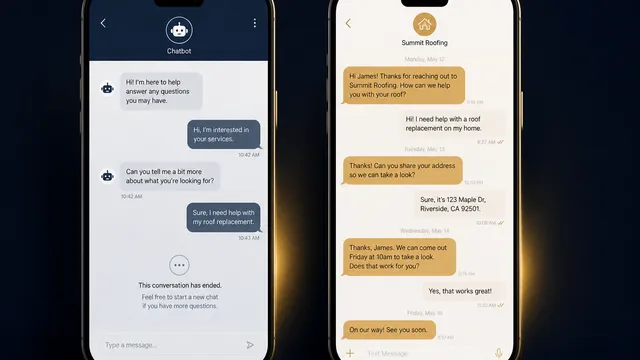

AI Sales Agents
Is GoHighLevel Worth It for Australian Service Business?
Every GoHighLevel review you will find online is written by an affiliate. Here is the honest picture for Australian service business owners.
AI will not replace your salespeople in a service business. Here is what an AI sales agent actually takes over, and what stays with your team.
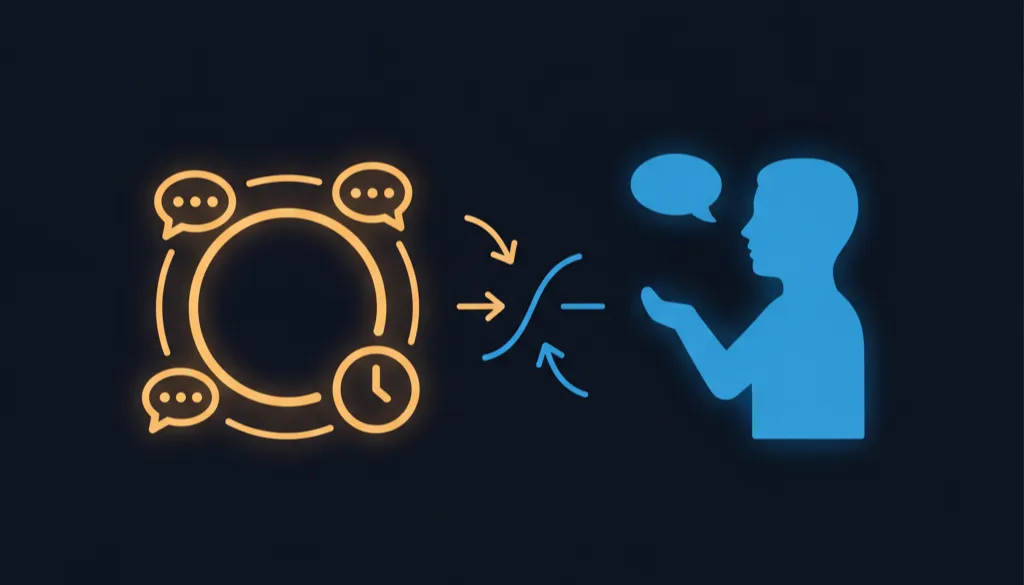
AI is not going to replace your salespeople in a service business. Australia’s own Jobs and Skills Australia study of generative AI reached the same conclusion across the whole labour market: the technology is more likely to augment jobs than replace them.
What it will replace is a chunk of what your team spends their time on. Responding to the enquiry that arrived at 8pm on Thursday, following up the quote that went quiet after three messages, re-engaging the lead who said “maybe next month” six weeks ago and has not heard from you since. Those tasks move to an AI agent. The work that still belongs to your people is the part that actually needs them.
Every major news story about AI and employment talks about displacement at scale. None of those stories are specifically about the person on your team who qualifies inbound trade enquiries, chases outstanding application documents for your finance brokerage, or follows up quotes for your building business. The general conversation is describing something different from what you are installing.
The parts of a sales role most directly affected by AI automation are the ones built around high-volume, low-complexity contact: initial outreach, follow-up sequences, appointment reminders, re-engaging a cold lead database. That repeatable work is exactly what the tools are built for. Small businesses are still early to it: ABS figures for 2024-25 put AI use at around one in ten small and micro businesses, against roughly a third of large ones.
The tools are not designed to handle the conversation that has gone sideways, the negotiation with a commercial client, or the referral relationship your team has been building for three years.
The sales role does not disappear. What changes is how the work inside it is distributed.
Before an AI agent: one person responds to all new enquiries, runs the follow-up sequence, re-engages the old database, and closes the work that is ready to close. Those tasks compete for the same attention. When the week gets busy, the closing work wins and everything else slips.
After an AI agent: the first three categories run automatically. The same person spends their time on conversations that are already warm. The pipeline they can work has grown without anyone being added.
In short, it handles the parts of a sales process that depend on speed, volume and consistency rather than judgment.
For a walk through a typical day, see what an AI sales agent does all day.
A service business running standard hours is available for roughly 40 out of every 168 hours in a week. Plenty of enquiries arrive in the other 128. A plumber gets a message on Friday evening about a quote for the following week. A mortgage broker receives a refinancing enquiry at 9pm from someone who thought about their situation during dinner. A skip bin company gets a form submission at 11pm.
Without an agent, those messages wait until Monday morning. By then, whoever replied first has usually already had the conversation. The five-minute window explains why the gap between an enquiry arriving and the first real reply costs businesses more than most realise.
Most businesses respond to new leads the same day. What falls apart is follow-up at contact four and five. The enquiry from Tuesday gets a reply on Wednesday and maybe one more on Friday. Then the week gets busy and it drops off the list.
An AI agent runs the follow-up sequence through contact six, seven, and eight without anyone having to remember to send it. The lead either replies or they do not, but they receive a proper sequence either way.
A database of enquiries from the past year contains people who said “not right now”, got a quote and went quiet, or simply stopped replying. An AI agent re-engages those leads systematically. ParadiseAI’s database reactivation service runs this across the existing database, contacting people who have long since dropped off the active list.
This is as important to explain to your team as what the agent can do.
In most small service businesses, a meaningful portion of closed work comes from referrals or from people who have heard of you through someone they trust. That does not come from an automated SMS sequence. It comes from the person who does the work, has the conversation, and leaves the client satisfied enough to mention you to someone else.
An AI agent does not attend the industry breakfast, does not call the property manager who has been quiet for three months, and does not build the kind of relationship that generates a referral two years later. That is a different job entirely.
A conversation where someone is spending a significant sum on a renovation, restructuring debt, deciding whether to accept a settlement, or making a major commitment is not one an AI agent should run on its own. That conversation needs someone who can read hesitation in a reply, adjust when the person is unsure, and know when to push and when to give them space.
When a client has been given the wrong information, a deal has gone sideways or a referral partner is unhappy, someone from your team needs to pick up the phone. An agent that tries to manage those conversations will make them worse, so a well-set-up agent recognises them and hands over to a person first.
In practice, the person who used to answer every new enquiry, run every follow-up and work the active pipeline can now focus on the conversations that need them. The same business works a larger pipeline without adding headcount, because one person is no longer trying to do everything at once.
Over time, some businesses do hire differently as they grow. That comes from the growth, not from the AI removing a job that was already there.
The most effective approach is to show exactly what the agent does, step by step, using a real scenario.
Walk them through it: a new enquiry arrives on Saturday afternoon. The agent sends a reply within sixty seconds, asks two questions about the job, gets a response, and offers three available times the following week. The lead books the Wednesday morning slot. By Monday morning, your salesperson has a confirmed call in the calendar instead of a cold message that has been sitting there for two days.
Show them the handoff point. At what moment does the agent pass the conversation to a person? What does that notification look like? What do they need to do to take it over? Those questions answered before go-live are what turn “the AI is going to take our jobs” into “the AI handles the first part, and we handle the rest”.
An honest description of what the agent does well, and what it does not do at all, makes this easier than most business owners expect.
What it replaces is the pipeline work that either was not getting done, or was being done by a person who should have been spending that time on warmer conversations.
Nobody is swapping a salesperson for a machine. One person stops trying to do everything in the pipeline and works the part that needs them, while the routine work runs in the background.
If you want to see exactly which parts of your sales process an AI agent would handle, and which ones stay with your team, a free revenue engine audit will map it against your actual setup.
In a small service business, no. AI sales agents handle the early-stage work well: initial responses, follow-up sequences, appointment booking. The parts that require judgment, local knowledge, and relationship-building remain with your people. The most common outcome is that the same person can manage a larger pipeline because the routine contact work is handled for them.
Roles that require on-site presence, complex judgment calls, local relationship management, or trust built over time are not at immediate risk. In a service business, that includes anyone doing field work, account management, high-value negotiations, or work where the client relationship is the primary product.
For high-volume, low-complexity contact it already has in large businesses. For small Australian service businesses, the more common outcome is that one person can handle more enquiries because an AI agent handles the routine parts of the conversation. That is different from replacement.
The strategic and coaching parts of a sales manager's role are not being automated. Managing pipeline data entry, tracking follow-up completion, and running standard report pulls are the administrative tasks AI tools handle now. The judgment about who to hire, how to develop your team, and why a deal is stalling belongs to the person.
Every GoHighLevel review you will find online is written by an affiliate. Here is the honest picture for Australian service business owners.
Not every service business in Australia needs an AI sales agent. Here is how to tell if yours does, and what makes one worth paying for.
Most service businesses have already tried an AI chatbot and found it lacking for sales. Here is what actually separates one from an AI sales agent.
We map where your leads go quiet, then show you the conversations an agent would have had. Thirty minutes, no obligation.